How big are Europe’s capital markets? Which countries and sectors have gained ground over the past three decades? And what has driven the region’s investment returns?
These are among the questions answered in the first Europe edition of the MSCI Institute’s Global Investment Tracker, which takes a chart-forward look at the region’s public and private capital markets.
Drawing on three decades of data, the report compares Europe’s markets against one another and the world to show how equity, bond and private-asset markets have evolved, how capital is allocated across countries and sectors and where performance has kept pace with, or fallen behind, markets globally.
Among highlights from the report’s charts and analysis:
How big are Europe’s public and private markets?
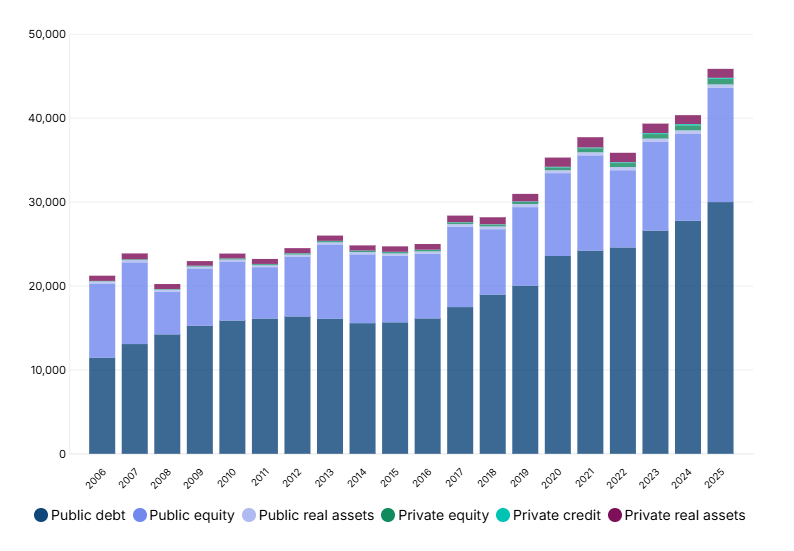
Europe’s public and private markets totaled an estimated USD 46 trillion (EUR 39.7 trillion ) in 2025, about 18% of the USD 250 trillion (EUR 215.7 trillion) global total and roughly in line with the region’s share of global GDP.
Public debt accounts for the largest share, at about USD 30 trillion (EUR 25.9 trillion), followed by USD 14 trillion (EUR 12.1 trillion) in public equity. Private markets remain a much smaller part of the investable universe, despite rapid growth over the past two decades.
Market value (USD Billion)
Source: MSCI Institute.
What have been Europe’s most valuable companies?
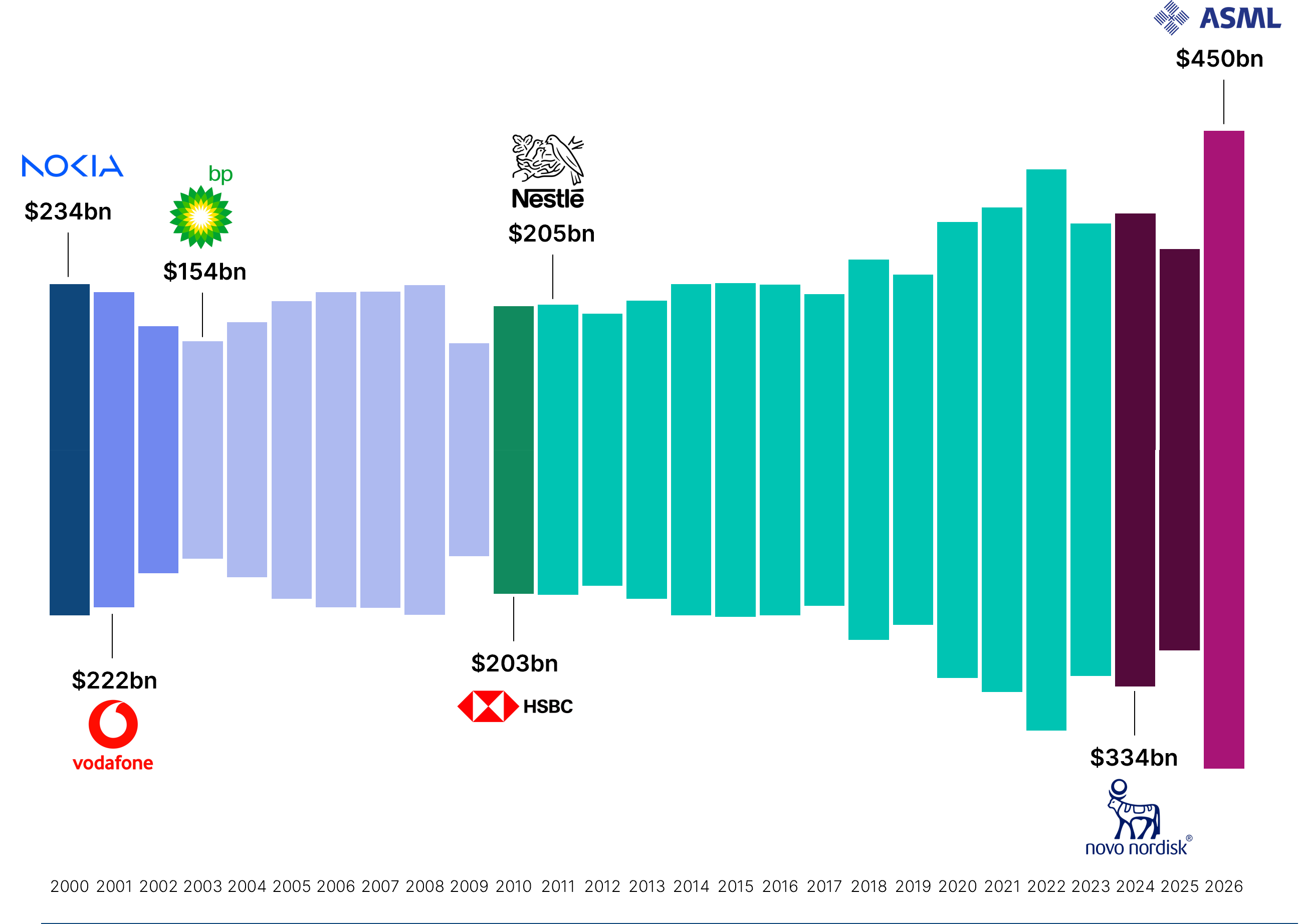
Europe has had seven different most-valuable companies in three decades, reflecting changes in both the region’s economy and its equity markets.
Nokia led at the turn of the millennium, followed by Vodafone, BP, HSBC, Nestlé and Novo Nordisk. In 2026, ASML took the top spot, reaching a market value of nearly USD 450 billion (EUR 388 billion) as of Aug. 31, 2026, amid strong demand for the advanced chipmaking equipment underpinning the global buildout of AI infrastructure.
Market capitalization (USD billions)
Source: MSCI Institute
Which markets dominate European equity investing?
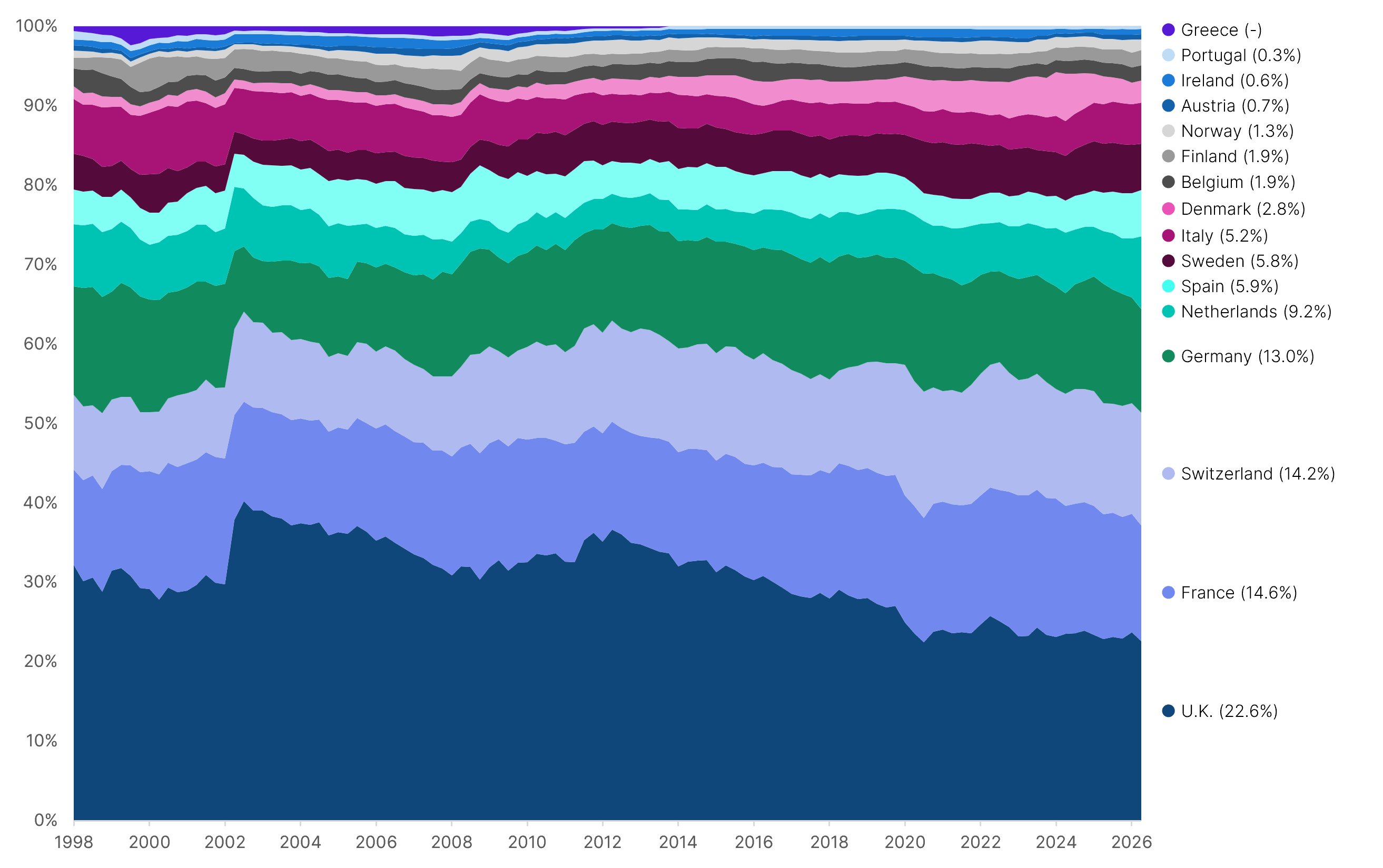
Europe’s equity market map has been redrawn over the past three decades. The U.K. remains the region’s largest market, but its share has fallen from 32% in the late 1990s to 23% today. Switzerland’s share has risen from 9% to 14%, narrowing the gap between Europe’s two largest markets from more than 20 percentage points to less than nine. The Netherlands has also gained ground, with its share rising from 7.5% to more than 9% in the second quarter of 2026 as ASML overtook Novo Nordisk to become Europe’s most valuable company.
Exposure based on market capitalization (%)
Source: MSCI Institute analysis based on MSCI IndexAI Insights data. Public equity data as of Aug 30, 2026.