Insurers say they’re prepared for rising physical risk but question whether the industry overall is ready, according to a report published by the MSCI Institute that examines the views of insurers and reinsurers on how physical risk is affecting underwriting and where they see opportunity.
The report, based on a survey of over 50 property and casualty insurers globally and interviews with both insurers and reinsurers in every region, arrives as the cost of extreme weather events and other hazards continues to climb. Insured losses from natural catastrophes exceeded USD 100 billion in 2025 for the sixth consecutive year, while estimates by MSCI Sustainability & Climate Research suggest that damage to assets and lost-revenue opportunities from physical risk could rise fourfold, to USD 4.6 trillion, by 2050.[1]
How global insurers say they are responding to rising physical risk
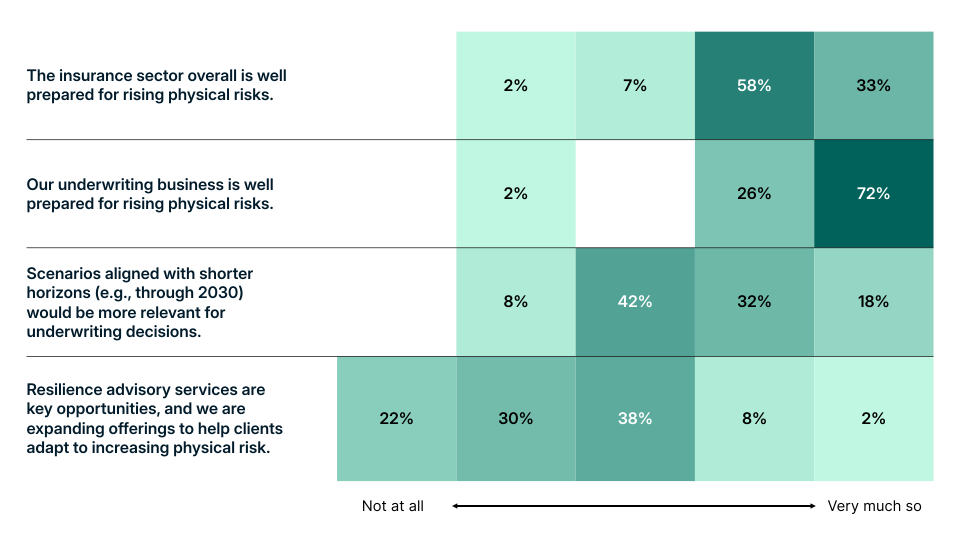
Source: MSCI Institute.
“These dynamics explain why physical climate risk is gaining prominence, not only in underwriting but also in broader discussions around financial resilience, market stability and the long-term availability of insurance.”
Rumi Mahmood, Pam Palena and David Carlin, report co-authors
Among the findings:
- Individual firms feel better prepared than the industry overall. Across all regions, insurers consistently assessed their own preparedness more favorably than the sector’s collective readiness. 62% of insurers in North America, 50% in APAC and 46% in Europe say that the industry is unprepared overall.
- Layered intelligence is gaining traction. As hazards intensify, insurers report that historical catastrophe models are losing reliability. They are responding by augmenting vendor models with geospatial analytics, high-resolution terrain data and localized hazard insights.
- Advisory services present the clearest opportunity. Most insurers surveyed (91%) see opportunities in physical risk management and resilience advisory services, while 58% cite parametric products as a key opportunity.
- Near-term scenarios matter more for underwriting. Globally, 43% of insurers report that their underwriting strategy is meaningfully informed by analysis of physical-risk scenarios. Nearly all insurers surveyed say scenarios through 2030 would be more actionable for underwriting decisions than those that look out decades.
- The maturity of physical-risk integration varies. A majority (68%) of insurers surveyed in Europe, for example, say they have integrated physical risk into overall risk management. That compares with 36% of those surveyed in APAC and a third in North America.
- Physical risk is rising on the regulatory agenda. The impact of physical risk on rising insurance costs, claims and availability is spurring supervisors in many regions to focus on insurers’ governance and risk management.
The report features a framework that shows how insurers progress from initial steps such as establishing governance structures or identifying key risk exposures to embedding physical risk across underwriting, pricing, capital allocation and resilience planning.
References
[1] “2025 marks sixth year insured natural catastrophe losses exceed USD 100 billion, finds Swiss Re Institute,” Swiss Re Group, Dec. 16, 2025.
Further reading

What the market thinks: Findings from our Corporate Resilience Survey
Companies are confronting the rise in physical risk head-on, with the overwhelming majority making plans to withstand the impacts a key part of risk management.

What the market thinks: Investors envision escalating risks of extreme weather
The world’s investors say that the risks of severe weather events will escalate and that global action to date is insufficient to stave off the costliest warming.