What does the latest academic research tell investors about some of the biggest questions in climate finance, where does it still leave them guessing and where are the gaps?
Those were the questions at an MSCI Institute-hosted forum at Climate Week NYC that brought together academic researchers and investment practitioners to examine the latest findings, test them against market experience and surface the questions that remain unresolved.
“This afternoon is built for the wonks in the investment community, the people who really love to wrestle with the evidence,” noted Linda-Eling Lee, the Institute’s founding director, who urged practitioners to focus on both what the research tells them and what they wish it told them.
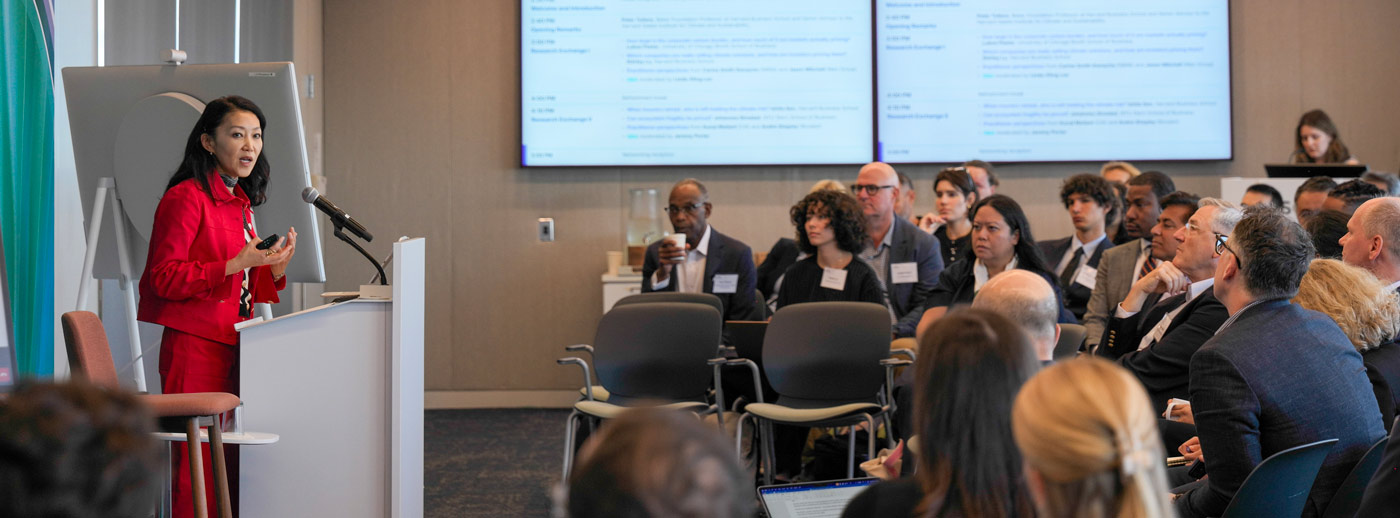
Linda-Eling Lee, founding director of the MSCI Institute
She similarly urged the academics to treat the conversation as an exchange rather than a series of presentations. “The goal here is not only to present your findings, but hopefully also to hear what practitioners find is the most useful and what they find difficult to apply.”
Presenters and panelists
Academic presenters
- Peter Tufano — Baker Foundation Professor, Harvard Business School, and Senior Advisor to the Harvard Salata Institute for Climate and Sustainability
- Shirley Lu — Assistant Professor of Business Administration, Harvard Business School
- Lubos Pastor — Charles P. McQuaid Distinguished Service Professor of Finance, University of Chicago Booth School of Business
- Ishita Sen — Assistant Professor of Business Administration, Harvard Business School
- Johannes Stroebel — David S. Loeb Professor of Finance, New York University Stern School of Business
Practitioner panelists
- Carine Smith Ihenacho — Chief Governance and Compliance Officer, NBIM
- Jason Mitchell — CIO for Responsible Investment, Man Group
- Kunal Motiani — Managing Director, Head of Risk Identification and Climate Risk, Citi
- Jeremy Porter, Ph.D. — Physical Climate Risk Research Director, MSCI (formerly Chief Economist, First Street)
- Andre Shepley — Senior Director, Nuveen Responsible Investing
The exchange ran both ways. While the academics presented, practitioners submitted the questions they most want the evidence to answer, from whether investor stewardship actually works to how markets should price climate tipping points. The Institute is compiling them into what Linda called “a practical research agenda coming directly from those who allocate and steer global capital.” A selection of those questions appears in the sidebar.
Four themes stood out:
1. More research doesn’t necessarily mean more answers.
Peter Tufano, professor at Harvard Business School and former dean of Saïd Business School at the University of Oxford, showed that climate finance has grown from roughly 500 papers over 11 years to around 1,400 submissions in the past year, across topics from natural disasters to physical climate risk and asset pricing. Research volume does not match market size: Green bonds get outsized attention while bank loans and mortgages, sovereign and municipal bonds remain relatively under-researched. (Peter co-edits the Climate Finance eJournal that the Institute launched with SSRN in 2024; subscribe for free at SSRN.)
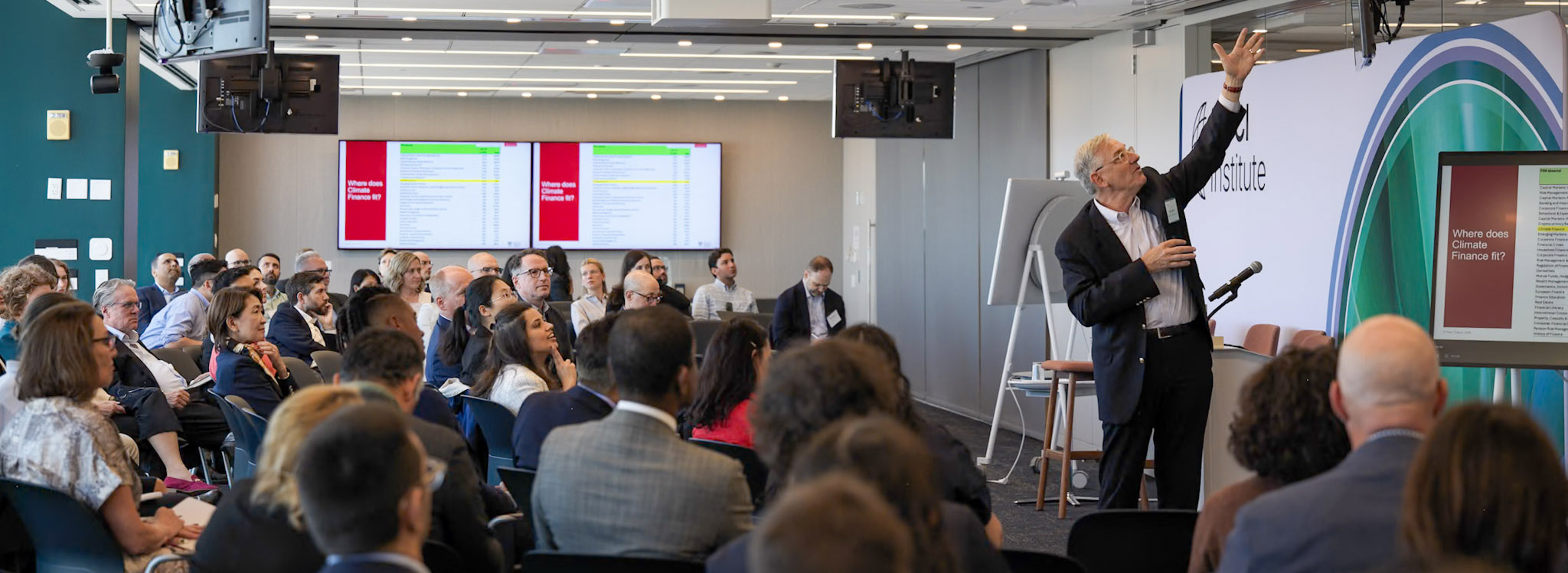
Peter Tufano, professor at Harvard Business School and former dean of Saïd Business School at the University of Oxford
2. Investors watch policy signals.
Shirley Lu, an assistant professor of business administration at Harvard Business School, discussed with practitioners her finding that investors accept lower expected returns from companies providing climate solutions, even as those companies tended to outperform following developments signaling greater transition risk. Lubos Pastor, professor of finance at the University of Chicago’s Booth School of Business, showed that markets price U.S. companies’ future rather than past emissions trajectories but only account for a tiny percentage of their carbon burden, prompting discussion of how investors with different time horizons should account for it.
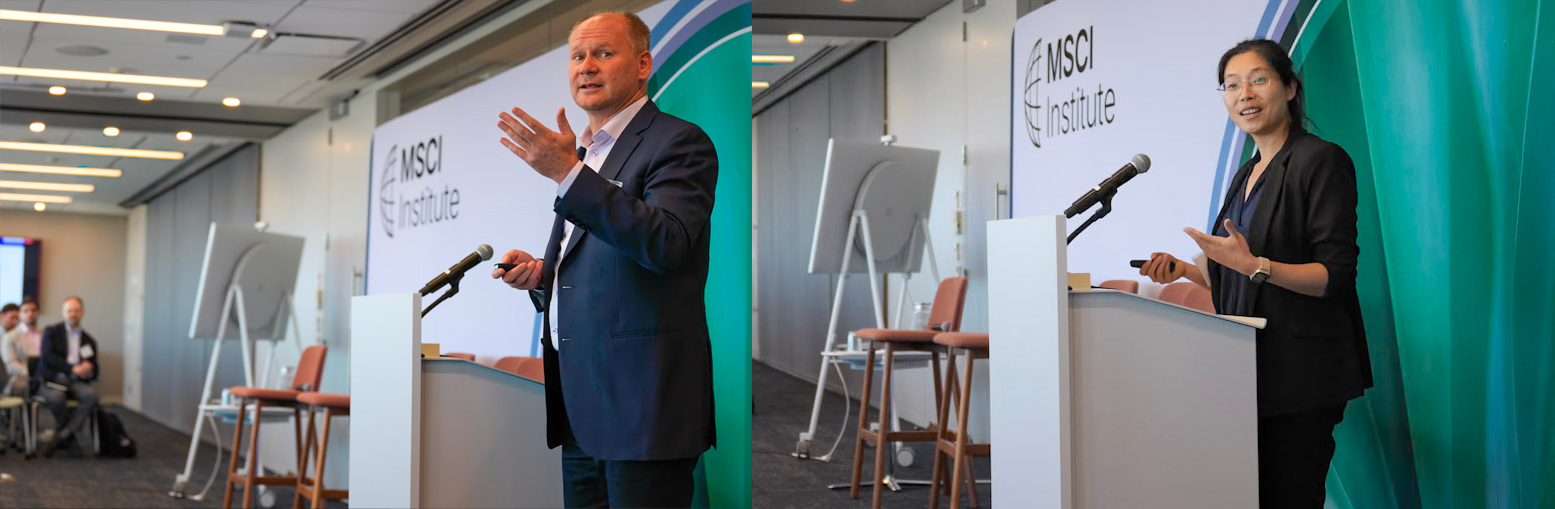
Lubos Pastor, professor of finance, University of Chicago Booth School of Business and Shirley Lu, assistant professor of business administration, Harvard Business School
3. Insurance can transfer risk, but visibility remains limited.
Ishita Sen, assistant professor of finance at Harvard Business School, explained how gaps in insurance protection can allow climate losses to move from households to lenders, mortgage markets and ultimately taxpayers. The discussion highlighted a persistent black box: where insurers provide coverage, how much they sell and their exposure to high-risk areas. Practitioners also stressed the need to understand the strength of insurance counterparties \
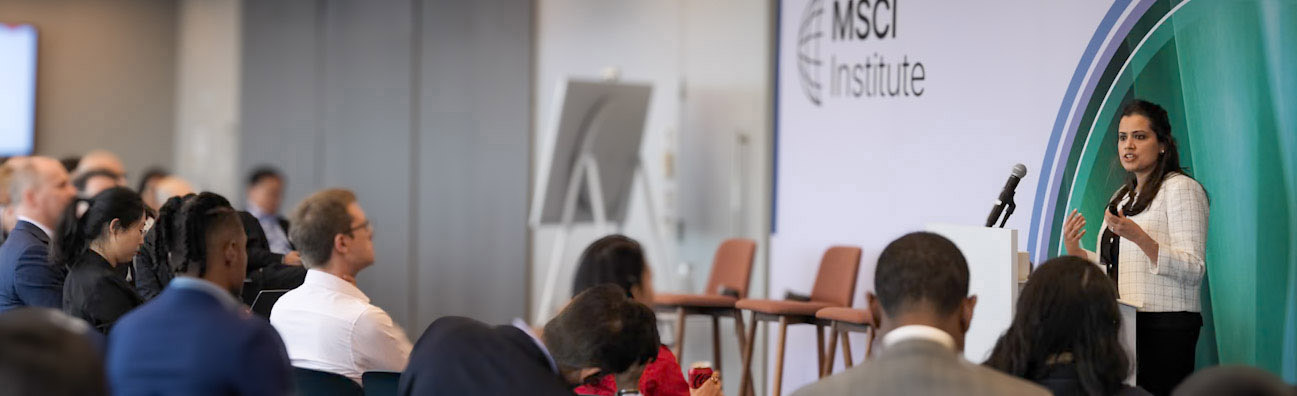
Ishita Sen, assistant professor of business administration, Harvard Business School
4. Nature may need its own financial-risk playbook.
Johannes Stroebel, a professor of finance at New York University’s Stern School of Business, challenged the notion that nature is “too difficult” to measure, drawing an analogy between modeling ecosystem services and the global economy. “What matters is not whether a species was lost, but what it was doing, and who else could do it,” he explained.
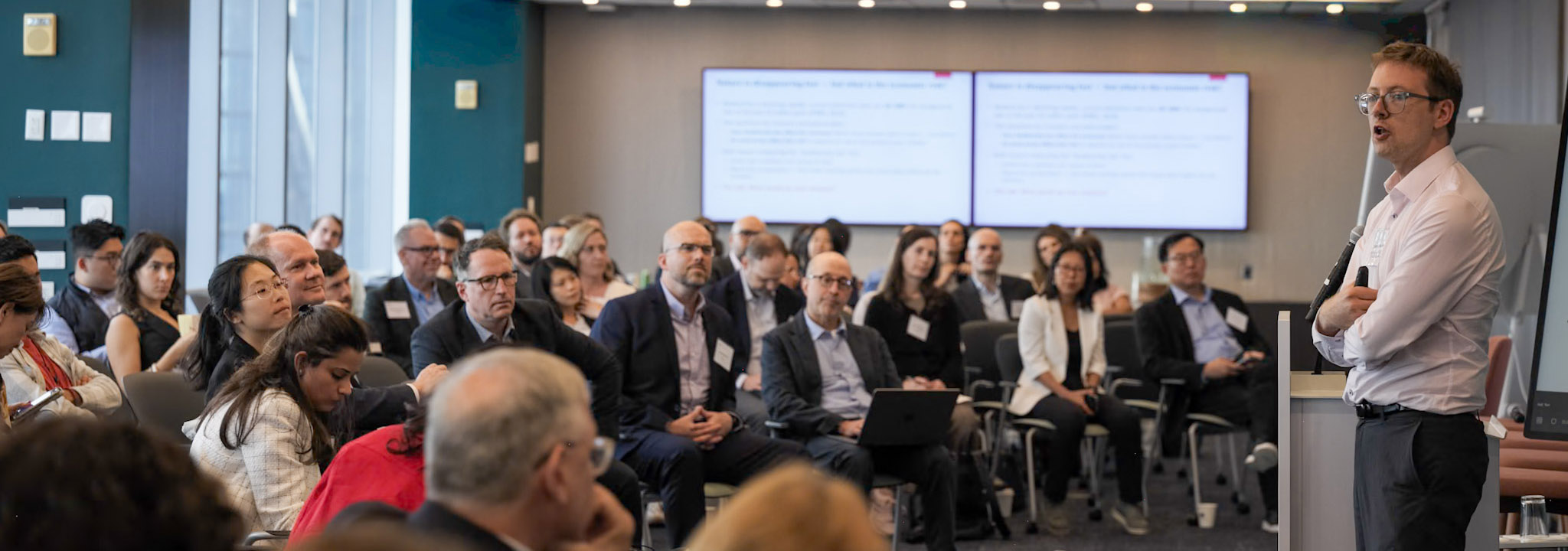
Johannes Stroebel, professor of finance, New York University Stern School of Business
For Linda-Eling Lee, the conversation underscored the value of engaging with the evidence. “We have so much more research now on where climate finance has gone right or wrong,” she observed. “Rather than talking about rebranding sustainability or climate, together in this room we can build the fundamentals for this next era.”
What practitioners want researchers to answer next
A selection of questions submitted by participants at our Climate Week NYC forum:
- Which climate metrics have actually demonstrated predictive value for financial risk or returns?
- What policies should be put in place so the carbon burden is priced?
- Are climate solutions companies priced for their future growth?
- With most capital toward climate solutions in private markets, what do you suspect the results would be if you constructed the study in that asset class?
- Has credible research been done into causal/correlative relationships between stewardship/engagement and actual emissions reduction or green-solutions adoption?
- To what degree do insurance prices/premiums give a forward-looking signal of physical climate risk for public markets?
- How should physical climate risk be incorporated into asset valuations when the timing and magnitude of losses remain highly uncertain?
- What happens to asset prices when water becomes a binding constraint on economic growth?
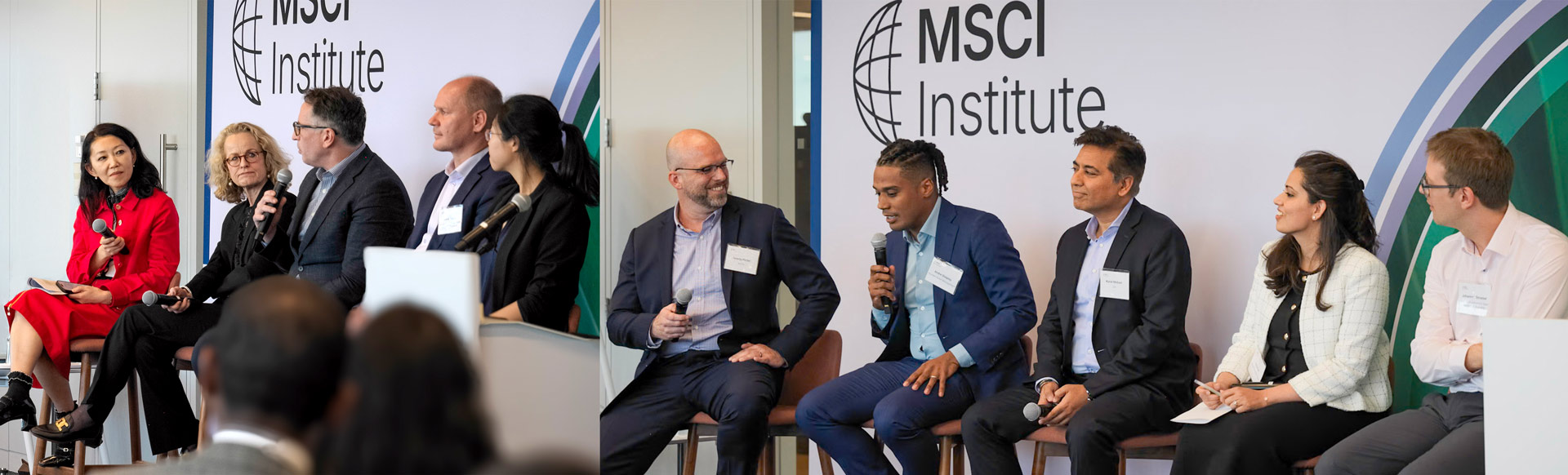
(left to right): Linda-Eling Lee, the MSCI Institute’s founding director; Carine Smith Ihenacho, chief governance and compliance officer, NBIM; Jason Mitchell, CIO for responsible investment, Man Group; Lubos Pastor, professor of finance, University of Chicago Booth School of Business; Shirley Lu, assistant professor of business administration, Harvard Business School; Jeremy Porter, physical climate risk research director, MSCI; Andre Shepley, senior director, Nuveen Responsible Investing; Kunal Motiani, head of risk identification and climate risk, Citi; Ishita Sen, assistant professor of business administration, Harvard Business School; Johannes Stroebel, professor of finance, New York University Stern School of Business


