Investors need competitive returns. Banks need projects that are insurable. And both need credible policy signals and regulatory stability to commit capital for the long term.
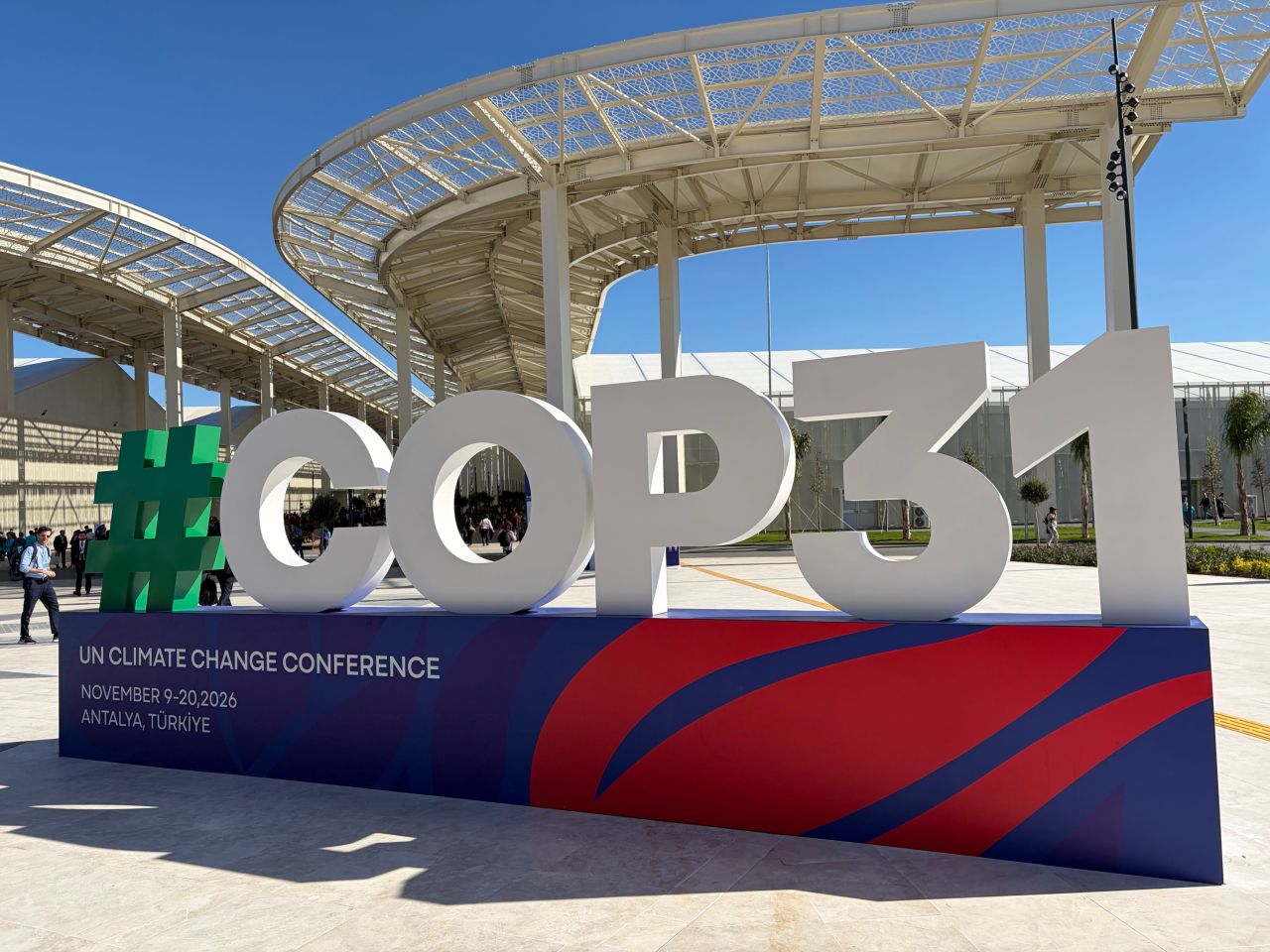
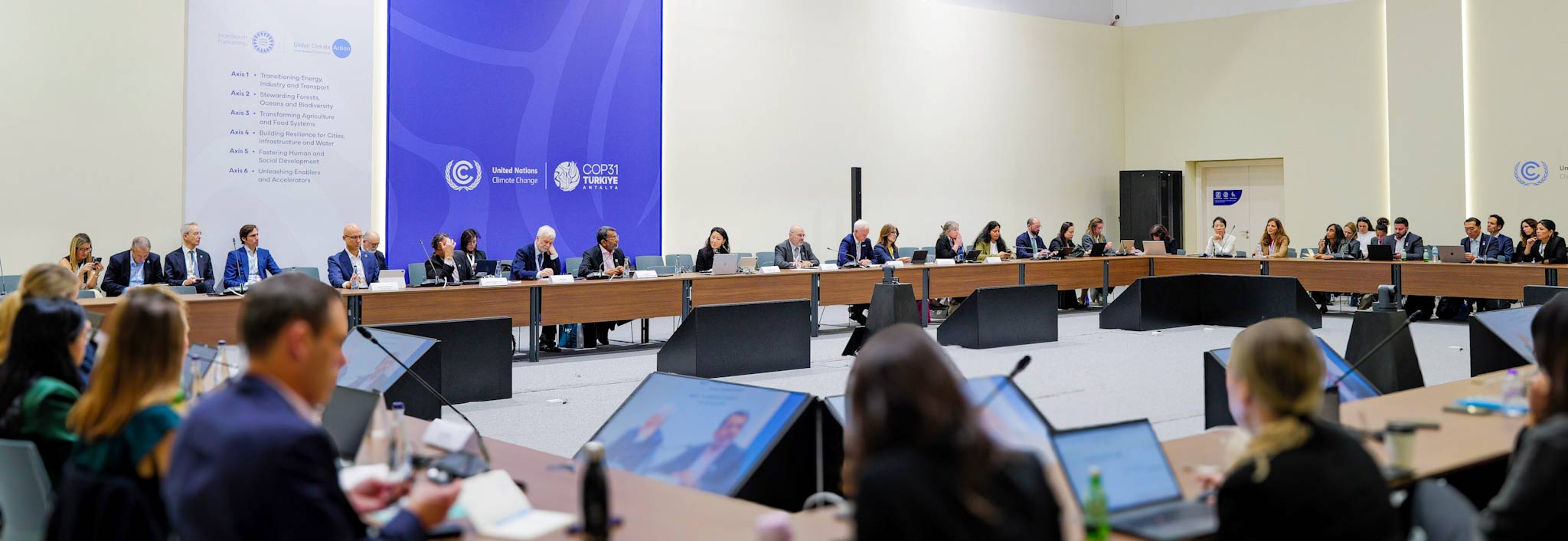
These interdependencies across capital markets were at the heart of “The Transition Premium: The Financial Evidence for Policy and Readiness,” a roundtable hosted by the MSCI Institute in collaboration with UN Climate Change at COP31 in Antalya, Turkey.
The discussion brought together asset owners and managers, banks, insurers and financial supervisors representing institutions globally.
“The transition is increasingly economically viable, but capital and technology alone will not set the pace,” said Linda-Eling Lee, the Institute’s founding director. Policies, institutions and a clear understanding of the costs of inaction are also needed to accelerate investment and action, she emphasized.
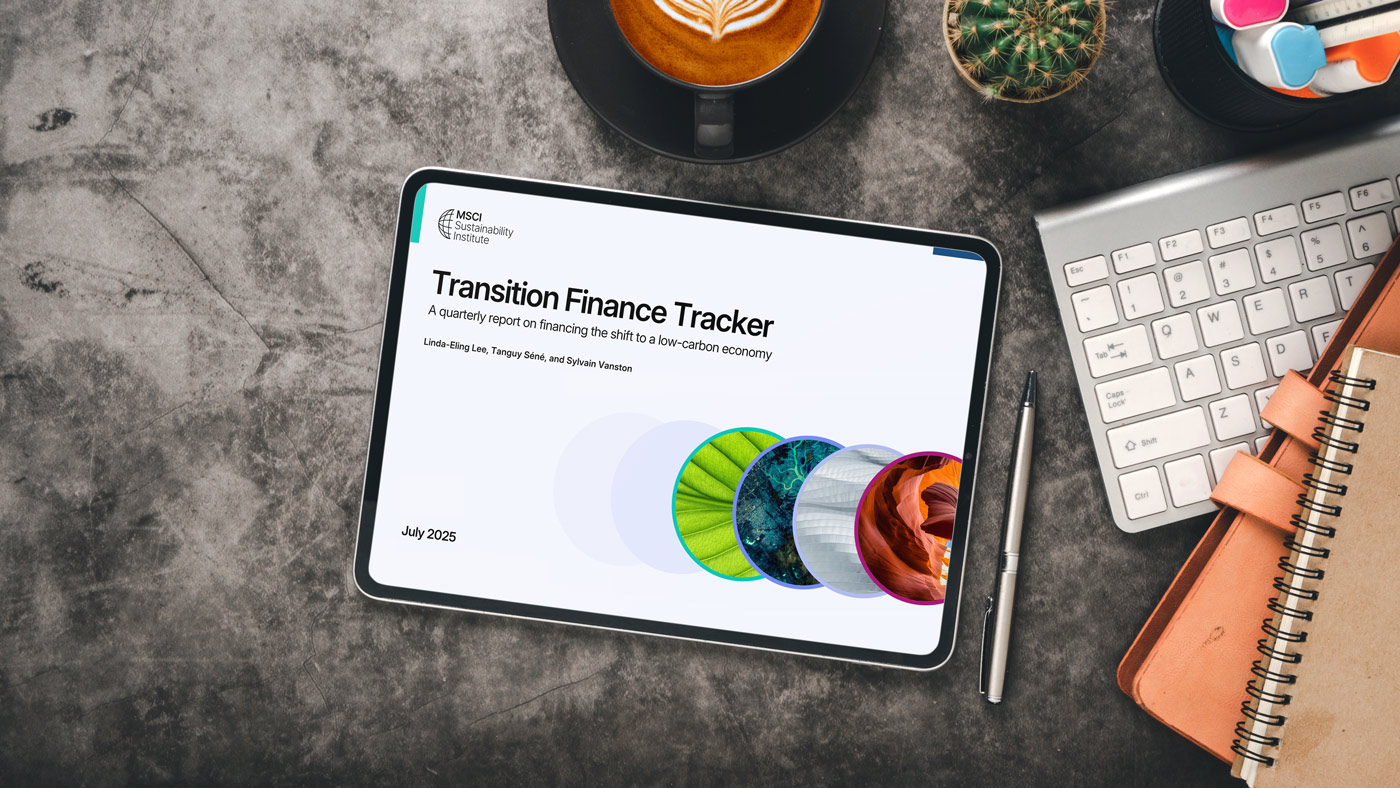
Drawing on the COP31 edition of the Institute’s Transition Finance Tracker, Lee posed a central question: Whether there is a financial reward for being on the right side of the transition, and what determines that reward?
Transition readiness is a financial signal
The economics of decarbonization are improving, but unevenly across industries. MSCI research finds that cost-competitive solar and wind technologies could address approximately 91% of listed power producers’ operational emissions, compared with 25% for cement and 19% for steel.
Javier Rodríguez Soler, global head of sustainability and corporate and investment banking at BBVA, pointed to the profitability of clean-technology investment as a driver of capital flows. But he also emphasized that public and private finance need to complement each other, with public capital absorbing risks that commercial investors cannot readily take.
Corporate preparedness also varies considerably, including within industries. Chris Cote, executive director with MSCI Research & Development, presented evidence that companies in the top fifth for transition readiness outperformed those in the bottom fifth by approximately 25 percentage points over the five years to April 2026. That historical gap widened to approximately 30 points when differences in transition pressure from policy, technology and business models were incorporated.
The findings suggest that preparedness matters financially, particularly where the pressure to decarbonize is greater.
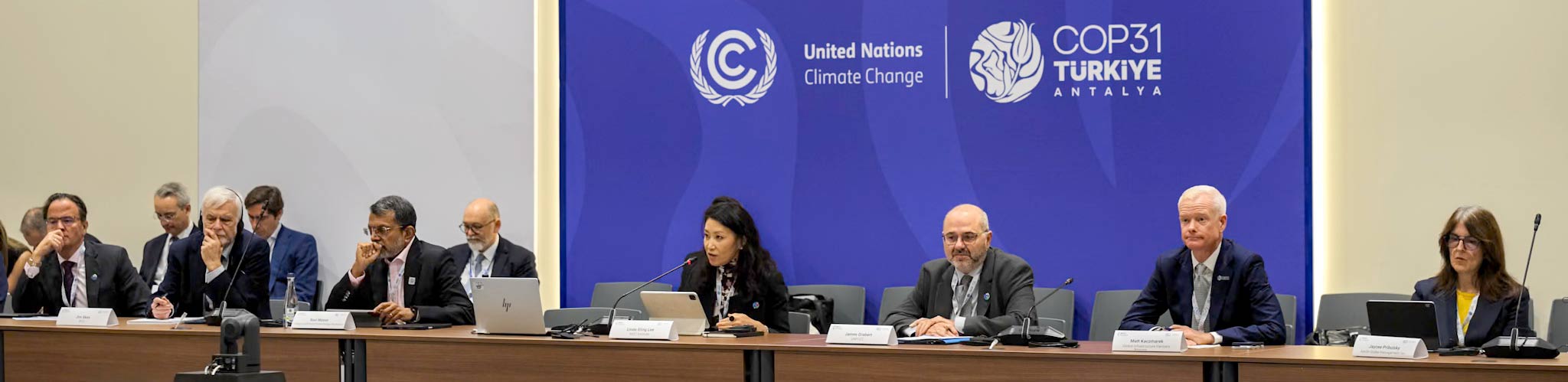
Left to right: Javier Rodriguez Soler, global head of sustainability and global head of corporate & investment banking, BBVA; Sir Jim Skea, chair of the UN Intergovernmental Panel on Climate Change; Ravi Menon, Singapore’s ambassador for climate action and senior adviser, National Climate Change Secretariat; Linda-Eling Lee, founding director and head of the MSCI Institute; James Grabert, head of the mitigation division, UNFCCC; Matt Kaczmarek, head of emerging market credit strategy, Global Infrastructure Partners, a part of BlackRock; and Jaycee Pribulsky, partner and chief sustainability officer, Apollo Group.
Capital is available, but investment remains uneven
Barbara Buchner, CEO of Climate Policy Initiative, noted that annual global climate finance has surpassed USD 2 trillion, with private investment contributing approximately 60% of the total. Yet roughly three-quarters of climate finance remains concentrated in advanced economies.
Singapore’s Ambassador for Climate Action, Ravi Menon, said that private capital is more than sufficient but often unwilling to invest at prevailing levels of risk and return. The challenge is to create investment opportunities that meet commercial requirements, particularly in emerging markets.
He highlighted blended finance, in which public or philanthropic capital absorbs some initial risk to attract commercial investment. Singapore’s Financing Asia’s Transition Partnership offers one example, designed to mobilize private capital for projects that might otherwise struggle to secure financing.
Matt Kaczmarek of Global Infrastructure Partners, a part of BlackRock, also pointed to blended finance and the importance of attracting long-term institutional capital to emerging markets. He emphasized the need for regulatory stability and diversified investment strategies that can attain scale to deliver competitive returns.
Jaycee Pribulsky, partner and chief sustainability officer at Apollo, described a once-in-a-generation cycle of capital formation, driven partly by rising electricity demand and investment in generation, transmission and storage. Scaling that investment, she noted, will require stronger project economics, clearer permitting and long-term planning.
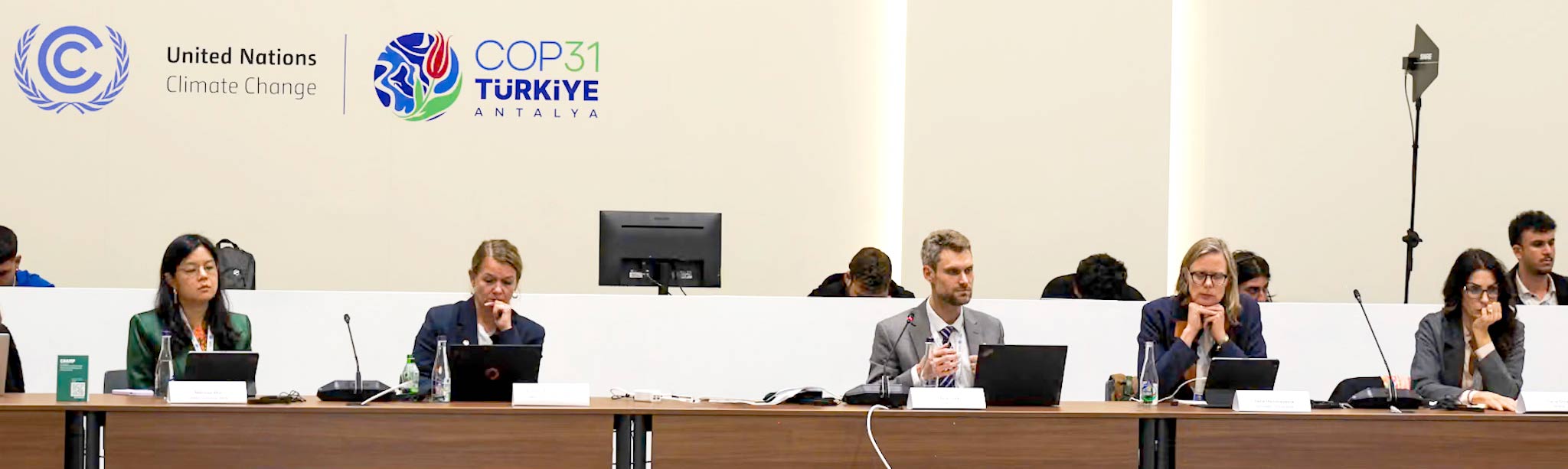
Left to right: Melissa Moi, head of sustainable business in the corporate sustainability office, UOB; Barbara Buchner, CEO, Climate Policy Initiative; Chris Cote, executive director, MSCI Research & Development; Irene Heemskerk, head of the Climate Change Centre, European Central Bank; Lucia Silva, group chief sustainability officer, Generali.
Policy, energy security and insurability
Credible, stable policies emerged repeatedly as a condition for long-term investment, helping to give investors confidence that the commercial conditions underpinning their decisions will endure. Irene Heemskerk, head of the Climate Change Centre at the European Central Bank, pointed to the increasingly visible economic impacts of physical climate risk and the energy-price shock following the closure of the Strait of Hormuz.
Countries with larger shares of renewable energy, she added, were better insulated from the resulting inflation, illustrating how the transition can also strengthen energy security.
Melissa Moi, head of sustainable business at UOB, described how policy can influence corporate investment through pricing, standards and demand for low-carbon products. She cited energy-efficiency requirements in Malaysia as an example of regulation prompting investment in industry.
Insurability presents another link in the financing chain.
Lucia Silva, group chief sustainability officer at Generali, highlighted the difficulties of insuring emerging technologies such as hydrogen and carbon capture and storage. She argued that insurers should participate in project development from the design stage, helping identify risks before technologies are deployed.
Together, the varied perspectives showed how mobilizing capital for the transition depends not only on competitive technologies, but also on credible policies and the ability to manage investment risks.
Incurring the costs of inaction
The financial case for the transition extends beyond potential investment returns. Rising physical climate risks are also affecting the economics of investment, increasing the importance of adaptation and resilience.
Lee pointed to MSCI research estimating that heat-related productivity losses alone are equivalent to approximately 2% of global economic output under current conditions. Physical climate risks are also putting pressure on insurance costs, potentially making assets more expensive to finance.
Mitigation and adaptation therefore need to be considered together, she noted. Delaying emissions reductions can increase the future costs of strengthening resilience. For his part, Ambassador Menon stressed the need for integrated approaches, citing a program launched by Singapore at COP31 designed to mobilize investment in the climate resilience of Southeast Asia’s agriculture and food sector. “You need data, you need project pipelines, and you need finances,” he noted, citing the program’s integrated approach.
Closing the roundtable, Jim Skea, chair of the Intergovernmental Panel on Climate Change (IPCC), warned that investment is not keeping pace with the growing physical impacts of climate change, including extreme heat, storms and flooding.
He called for closer collaboration between climate scientists and financial institutions, including more financial data to help assess adaptation needs. He also stressed the importance of understanding the assumptions behind climate scenarios and financial assessments “Don’t just ask us for numbers. Please ask us what the numbers mean,” Skea urged.