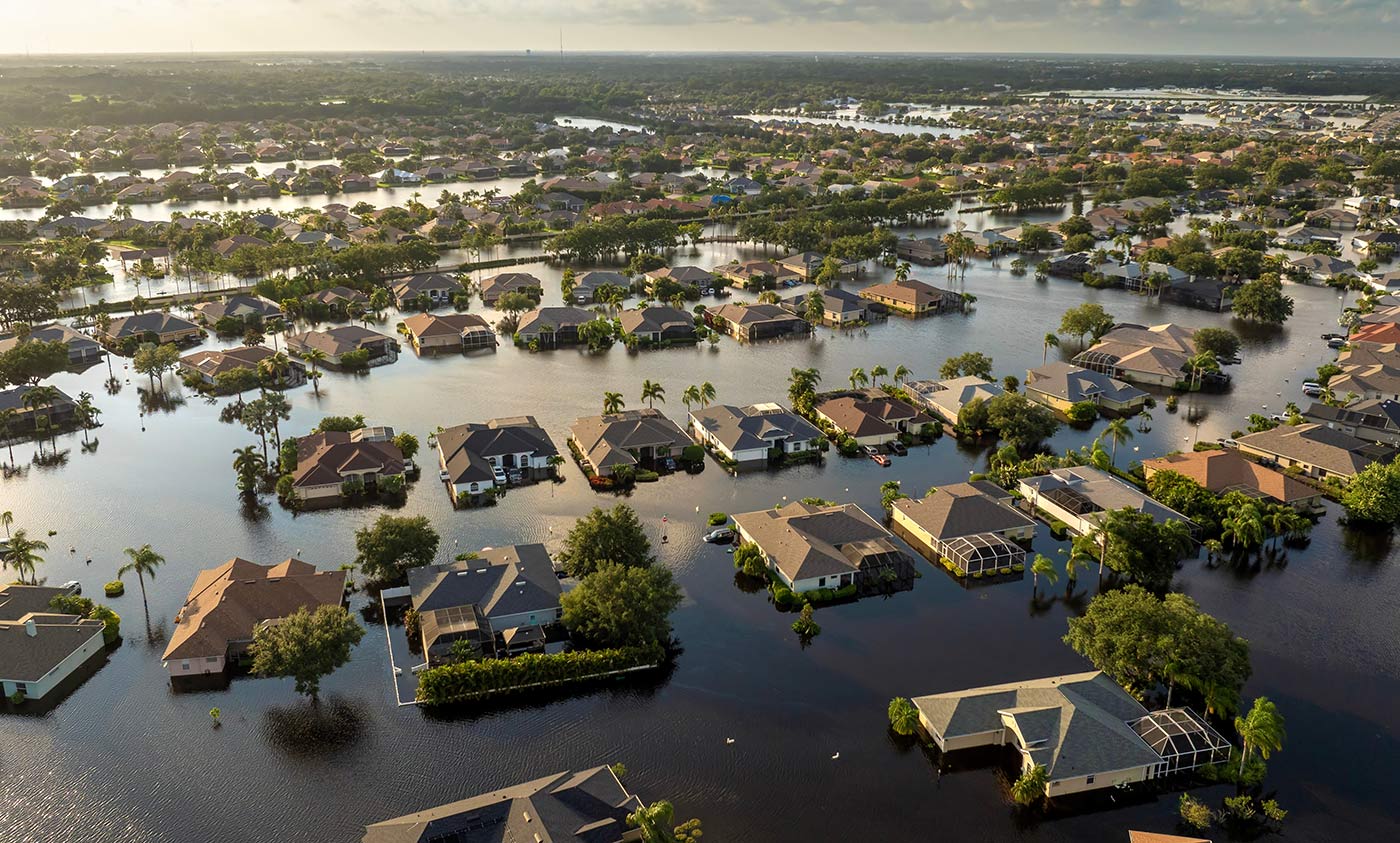
While awareness of physical climate risk has grown considerably, translating that awareness into investment, governance and financing remains a central challenge for companies and investors.
That was the top-line theme surfaced by more than 70 senior leaders in risk, sustainability and finance who gathered during Singapore’s Ecosperity Week 2026 to discuss how to scale finance for adaptation and resilience amid rising physical climate risks. Through eight roundtables convened by the UN Global Compact Network Singapore with research support from the MSCI Institute, participants examined how to move from awareness to action, the role of data and insurance, and the partnerships needed to accelerate investment in resilience.
The discussions, held under Chatham House Rule, reflected a broader market reality: physical climate risk is rising, organizations are responding, but action has yet to keep pace with the scale of the challenge.
Institutions represented:
Airgorithm
Allianz
Aon
APRIL International Enterprise
ArkTerra
Asia Infrastructure Solutions
Bird & Bird
Blue Bond Accelerator
CBRE
Chanel
City Developments Limited
Climate Arc
Climate Investor One
Credit Agricole CIB
Cundall
DBS
DFI Retail Group
Enterprise SG
ERM
Ernst & Young
Future Fit Foundation
Giti Tire
Grant Thornton
GRI
Grow Asia
Guava International
Heifer International
HSBC
Human Meridian Advisory
IHH Healthcare
Income Insurance Limited
Keppel Limited
KPMG
LaSalle Investment Management
Marsh
Maybank Singapore
Mediera
MUFG
NCS
Nissay Asset Management Corporation
NTUC
NUS
OCBC Bank
OVOL
Phoenix EcoTech
PWC
Ramboll Singapore
SATS
Schneider Electric
Seatrium
SGS International Certification
SGX
SK Tes
SMF
Standard Chartered
Surbana Jurong
Swiss Re
Temasek
Tsao Pao Chee Group
UN Office for the Coordination of Humanitarian Affairs (OCHA)
UN Principles for Responsible Investment
UN Development Programme
Univers
Unravel Carbon
UOB
Warburg Pincus
WongPartnership LLP
Highlights
Across the discussions, participants converged on six practical levers for translating awareness of physical climate risk into action.
1. Location data and risk assessments are the foundation of resilience. Knowing where assets are located — and validating modeled risk on the ground — enables better investment decisions and earlier, less costly resilience measures.
2. Adaptation is already happening but remains largely invisible. Resilience investment is often embedded in existing spending, making better labeling, disclosure and evidence of financial value critical to scaling finance.
3. Governance determines whether adaptation becomes a business priority. Clear ownership and informed boards can embed physical risk into decisions about business continuity, competitiveness and investment.
4. Adaptation must be approached as shared public and private action. Public-private mechanisms can help manage systemic risks that exceed individual balance sheets while extending resilience to SMEs and smallholders.
5. Insurance enables resilience but cannot substitute for it. Insurers can help reduce the protection gap by combining risk transfer with better data, pricing signals and risk intelligence.
6. Supply-chain resilience depends on prioritization and collaboration. Identifying critical nodes and strengthening vulnerable suppliers can help prevent physical climate risks from becoming business disruptions.