The 2026 World Cup promises six weeks of nonstop soccer and a live case study in physical risk across 16 locations in North America. The latest edition of our Institute’s Transition Finance Tracker examines physical hazards at each pitch, climate fund performance, tech giants’ Scope 2 emissions, and bond investors’ exposure to financing low-carbon energy relative to fossil fuels, alongside our quarterly snapshot of corporate targets, emissions disclosure and more. Here are five highlights from the report.
What can physical hazard data tell us about the 2026 World Cup?
AT&T Stadium and SoFi Stadium, Levi’s Stadium and Hard Rock Stadium top the list of World Cup locations for exposure to heatwaves, rain-induced flooding and lightning, respectively, according to our analysis using MSCI GeoSpatial Asset Intelligence. Lincoln Financial Field has the highest exposure to subsidence, which captures ground-surface sinking, a long-term risk for that site.
Physical exposure by stadium location (normalized by hazard, 1-10)
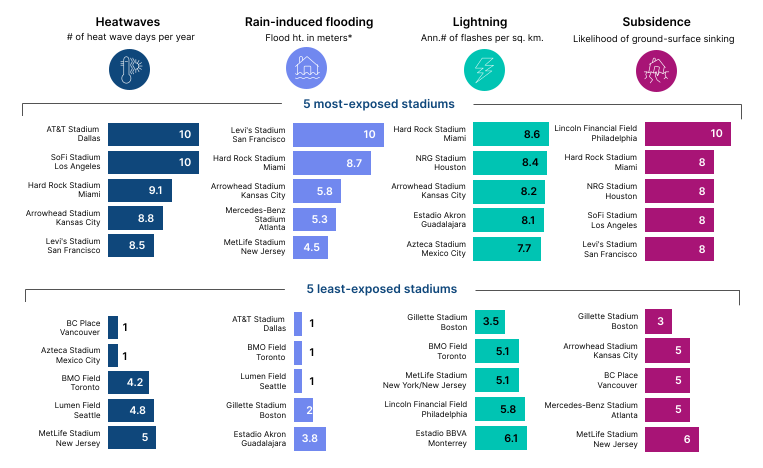
* Return period of 100 years. Source: MSCI Sustainability & Climate Research, using MSCI GeoSpatial Asset Intelligence – Physical Risk – Hazard Exposure data as of Dec. 31, 2025. MSCI Sustainability & Climate products and services are provided by MSCI Solutions LLC in the United States and MSCI Solutions (UK) Limited in the United Kingdom and certain other related entities.
How have climate funds performed?
Listed climate-themed funds notched a median return of 12.2% last year, up from 5.2% in 2024. Assets in these funds reached USD 652 billion as of Dec. 31, 2025, up 16.4% from a year earlier. There were also about 227 climate-named private-capital funds globally, with combined capitalization of about USD 143 billion, as of Sept. 30, 2025.
Capital in climate funds (USD billion)
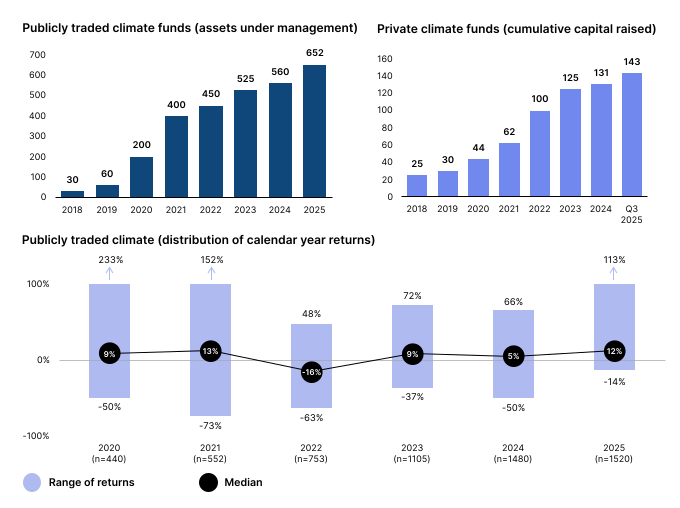
Source: MSCI ESG Research and MSCI Private Capital Universe. Public funds data as of Dec. 31, 2025. Private funds data as of Sept. 30, 2025. Public funds include equity, fixed income and multi-asset ETFs and mutual funds. Private funds include private equity, private credit, and private real assets funds.
How do tech giants’ energy-related emissions compare?
Hyperscalers such as Amazon, Alphabet, Microsoft and Meta have been able to match emissions credits obtained via renewable-power purchase agreements against the overwhelming share of their reported emissions from purchased energy (Scope 2). That could change: A pending proposal by the Greenhouse Gas Protocol would tie Scope 2 reporting more tightly to the times and locations where the company’s energy consumption occurs, with significant implications for companies’ carbon footprints.
How do tech giants’ energy-related emissions compare?
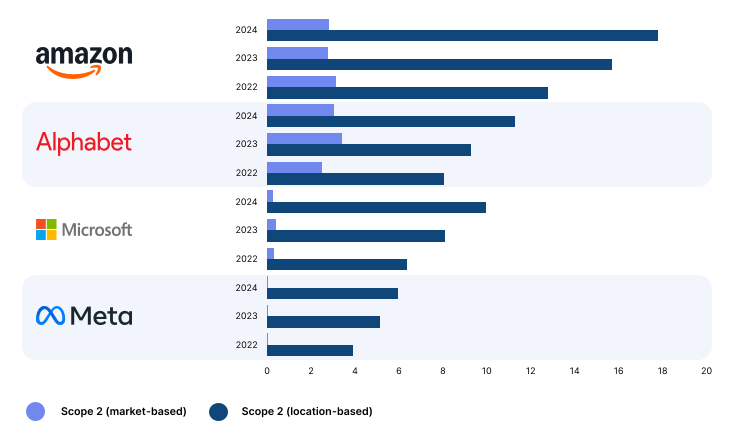
Source: MSCI Sustainability & Climate Research, based on company-reported data as of Dec. 31, 2024.
How much low-carbon energy relative to fossil-fuel energy are bond investors financing?
A hypothetical bond portfolio tracking an index designed to decarbonize in line with the goals of the Paris Agreement can finance an estimated USD 2.57 of low-carbon energy supply for every dollar of fossil-fuel energy supply, while one that tracks an emerging-market bond index finances USD 0.03 for every dollar.
Financed exposure (low-carbon revenue divided by fossil-fuel revenue)
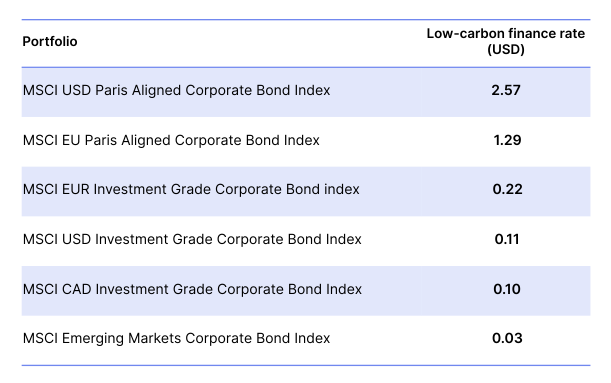
Source: MSCI Sustainability & Climate Research, data as of Dec. 31, 2025. Low-carbon revenue refers to revenue from activities in the low-carbon energy sector, including generation, storage, transmission, and distribution infrastructure. Fossil-fuel revenue refers to revenue from activities in the exploration, extraction, production, transportation, distribution, refining or retailing of oil, gas and coal. For complete definitions, see “Financial Institutions Net-Zero Standard. Version 1.0,” SBTi, July 2025, esp. p.30 and Table 2 therein.
What percentage of companies have set climate targets?
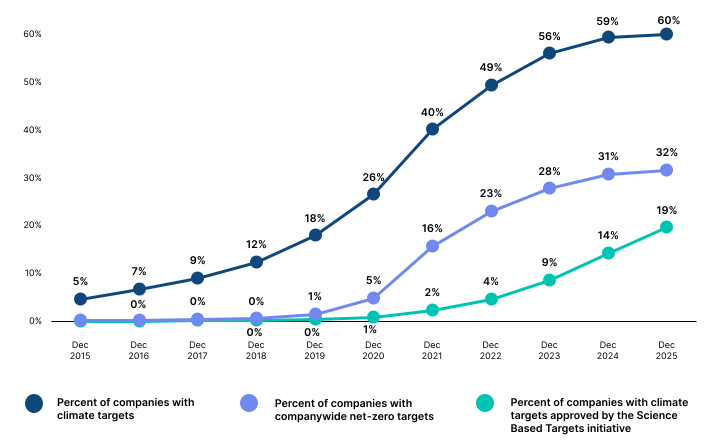
Nearly one-fifth (19%) of listed companies had a climate target validated by the Science Based Targets initiative (SBTi) as of Dec. 31, 2025, up from 14% a year earlier. Nearly a third (32%) of companies have set a net-zero emissions target, though not necessarily one validated by the SBTi, roughly unchanged from a year earlier.
Share of listed companies with disclosed climate targets by target type
Source: MSCI Sustainability & Climate Research, data as of Dec. 31, 2025. Note that totals are cumulative. The share of corporate climate targets reported here reflects the relevant share of all companies in the MSCI ACWI IMI.