Linda-Eling Lee, Founding Director, MSCI Institute | Lucien Georgeson, Head of Policy, MSCI Carbon Markets | Juliana Mendonça, Index & ESG Sales Specialist, Latin America
Key findings
- For investors, the outcomes of COP30 neither change the pace or scope of the energy transition nor mark a leap forward or a step back for carbon markets.
- The U.N. climate summit underscored that physical risk, the urgent need for adaptation and calls to protect nature are rising on participants’ agendas.
- COP30 shows that multilateralism may be alive, but driven by coalitions of like-minded countries who aim to address the transition to a cleaner, more resilient global economy in their respective ways.

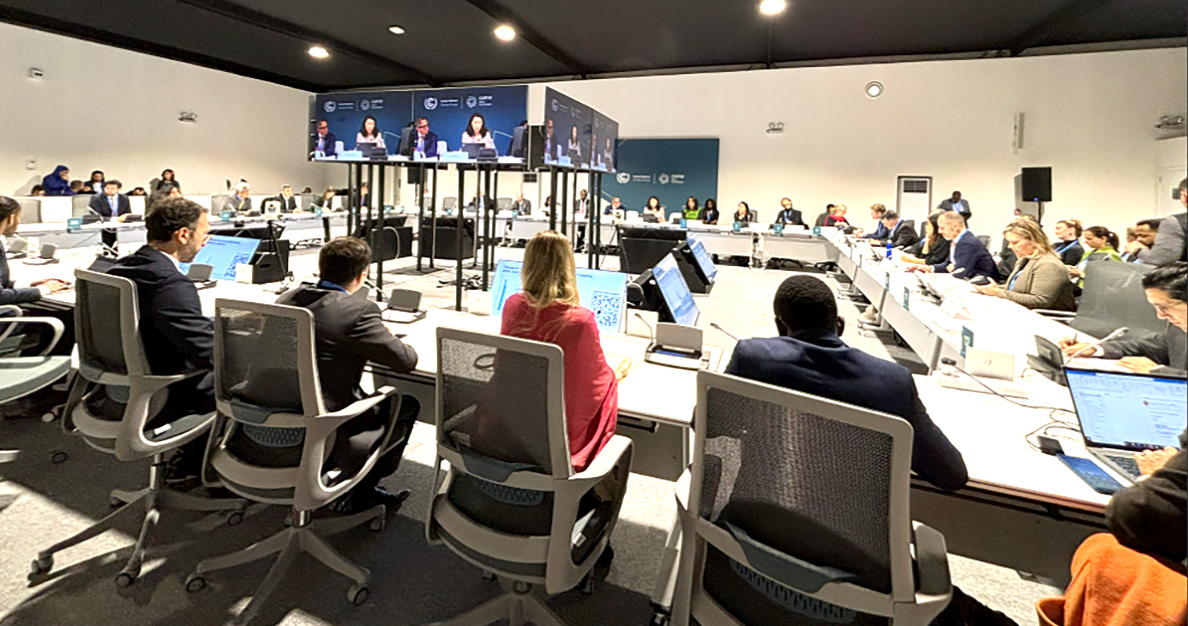
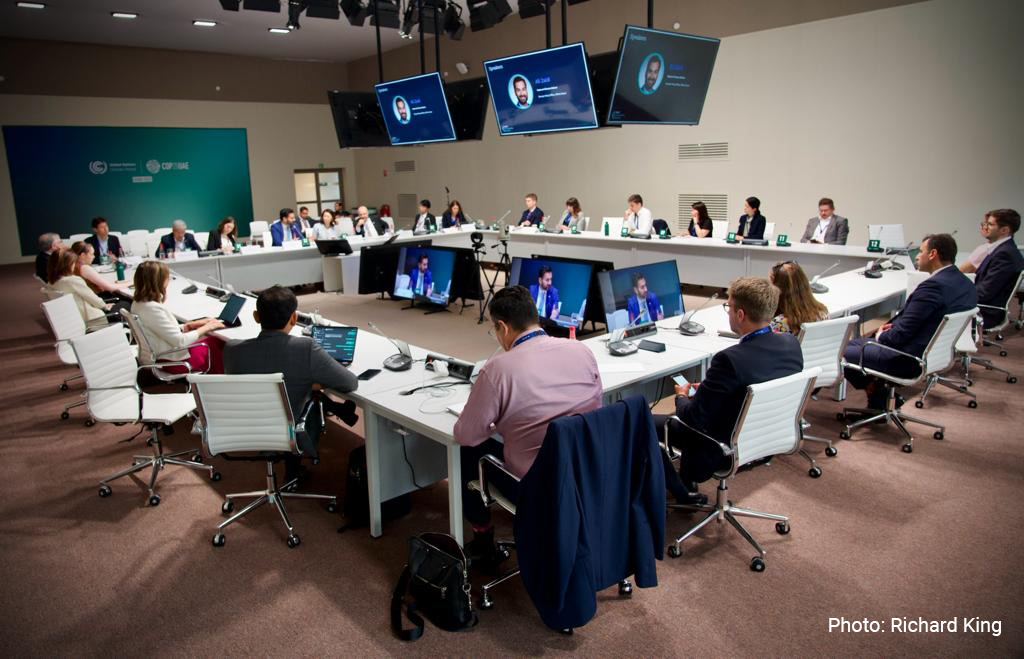
The authors in the COP30 Blue Zone.

Linda-Eling Lee, the MSCI Institute’s founding director (second from right), discusses the use of data-driven analytics in climate investing with, left to right, Jane Lomax, lord mayor of Adelaide, Australia; David Gonahasa, an economist with Uganda’s Ministry of Science, Technology and Innovation; Al Gore, the former U.S. vice president and a co-founder of Climate TRACE; Andrew Zolli, chief impact officer, Planet Labs; and James Grabert, mitigation director, UNFCCC.
COP30 was always destined to be a different U.N. climate summit than those that came before it.
The host city, Belém, Brazil got a bad rap — hassles getting there, a dearth of accommodations — long before the first delegate landed. The drama continued with Amazonian rains that fell through the venue’s roof. Fire in the Blue Zone!
But for one of the authors, COP30 marked a moment of pride in her hometown, which for all its culture, nature, food and warmth, was an afterthought for economic development and opportunity. For two weeks — whether sharing a cab with Yemen’s environment minister or helping members of the British delegation buy tickets to cross the river — she could barely believe she was in the same city she grew up in.
So now that the COP30 delegates have decamped from Belém, what are we left with? The headlines have focused on the heated squabbling over mentioning fossil fuels in the final agreement. (There’s no mention.) On funding to help developing countries transition to renewables and adapt to climate change. (There’s more money, but not much more and not soon.) On an absent U.S. and on whether China steps up. (Swag at the China pavilion included toy panda bears.)
For the world’s investors who were half-watching, what can they take from this? For all the drama in the room, the top-line for investors at COP30 was no major progress but importantly, also no retreat. Nothing to trigger a step-change in the pace or scope of the energy transition. Neither a leap forward nor a step back for carbon markets. What emerged more clearly on the agenda of participants is the rise of physical risk, and the urgent need for adaptation, as well as calls to protect nature. Though the convening hosted fewer CEOs, the summit included plenty of private sector engagement on the ground.

Indigenous leaders in the COP30 Blue Zone.
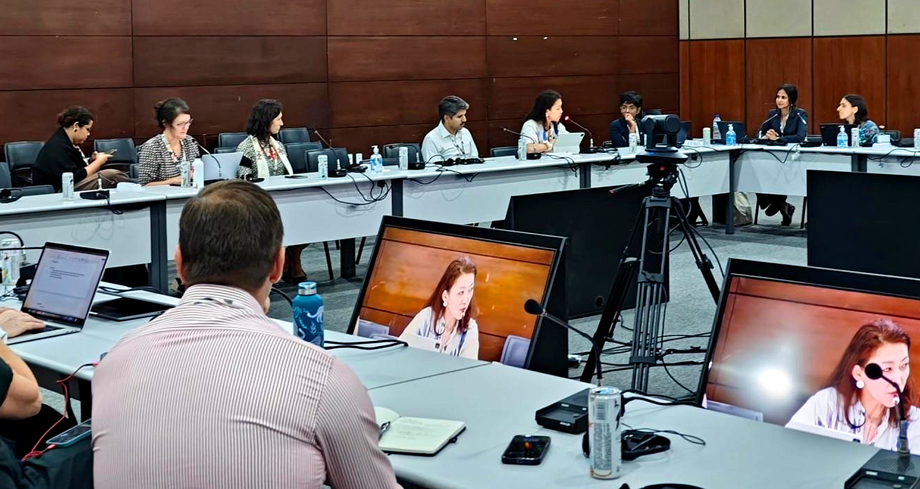
Linda-Eling Lee, founding director of the MSCI Institute (back row, second from right), at a COP30 discussion on scaling adaptation finance hosted by the Asia Investor Group on Climate Change, ClimateWorks Foundation, Laudes Foundation and Impact Europe.
Let’s look at these issues in more detail.
More than one energy transition
One overarching objective for COP30 was to show that multilateralism still works when it comes to tackling climate change and other global challenges. In place of unanimity across 190+ countries, we saw coalitions of countries, operating within the apparatus of multilateralism, committing to do things, but do them differently. The energy transition illustrates this. COP30 pitted a coalition of roughly 80 countries clamoring to create roadmaps to phase out fossil fuels against others who refused to reiterate or go beyond what countries already agreed to in Dubai two years ago.
The outcome in Belém seems unlikely to alter the outlook for global investors, who by now are becoming accustomed to running scenarios that assume a more multipolar world. They are paying attention to countries’ domestic policies and how they alter the economics of their transition investments, which continue their double-digit growth. As our colleagues have detailed, the energy transition is driven by technology and, at times, supported or constrained by policy.
COP30 acknowledged as much, with differences in countries’ approaches to energy serving as a key subtext to the negotiations. The agreement includes the launch of a “Global Implementation Accelerator” to support countries in implementing their climate targets and national adaptation plans.
No leap forward but no steps back for carbon markets
Delegates arrived at COP30 with little left to negotiate on international carbon trading after governments approved the framework for Article 6 of the Paris Agreement last year in Baku. Yet the return of fractious debates over standards threatened to reopen issues that had seemed settled. In the end, nobody on either side of the wrangling got what they wanted. If anything, the summit may matter more for carbon markets based on what delegates left out than on what they put in.
Article 6.2
On emissions trading between countries, the agreement at COP30 encourages countries to prioritize transparency and ambition in their bilateral agreements over emission reductions that could be achieved with domestic resources. Efforts in Belém either to reduce oversight of Article 6.2 deals by the U.N. Framework Convention on Climate Change or, alternatively, to tighten control of the transfer of emission reductions (known as Internationally Transferred Mitigation Outcomes) both fell short.
The upshot: Independent scrutiny of country-to-country deals, as well as credits that countries “unilaterally authorize” for transfer to countries or airlines under the CORSIA scheme for international aviation, matters. MSCI has introduced an Article 6 Integrity Framework to capture cross-border and policy-level risks as the Article 6.2 market evolves.
Article 6.4
Negotiations in the summit’s first week threatened to reopen previously agreed rules on Article 6.4, an international carbon market known as the Paris Agreement Crediting Mechanism (PACM), amid wrangling over standards on non-permanence developed by the PACM’s technical supervisory body. Though it came to nothing in the end, the final outcome calls for the supervisory body to increase the transparency of the workings of its Methodological Expert Panel (MEP), which will have a significant role in determining what types of projects make it into the PACM, especially when it comes to nature-based solutions.
The Clean Development Mechanism
Guidance on the Clean Development Mechanism (CDM) — the Kyoto Protocol-era crediting mechanism that has been criticized for low integrity — finally allows for its closing and its earmarked funds repurposed. On the other hand, a decision at COP30 extends the deadline by six months, to mid-2026, for countries to approve requests for CDM projects to transition to the PACM.
Extending the deadline for country decisions on transitions is unlikely to significantly impact either the number of CDM projects making the move to the PACM or the quality of Article 6.4 credits in the long run. Elsewhere, COP30 set a year-end 2026 deadline for the transfer of CDM credits for short-term use toward countries’ nationally determined contributions (NDCs). Neither the extension for full transitions nor the deadline for fixed-term transfers changes the eligibility of existing CDM credits, which remain usable only toward countries’ first NDC targets (2030), with transfer permitted only for credits from the 2013 to 2020 vintages.
Putting a price on carbon
The topic of trade rose on the COP30 agenda. A number of countries, including China, charged that the EU’s Carbon Border Adjustment Mechanism (CBAM), which will be tied to the weekly average auction price of allowances in the EU’s Emissions Trading System, constitutes an unfair trade practice masquerading as a green objective.
The EU’s climate commissioner contended that the CBAM is a climate measure, not a trade tool, and that the EU hopes that other nations will introduce carbon pricing of their own. Brazil espoused a similar view, persuading 18 governments, including the EU, China, the UK, Canada and Singapore to join an Open Coalition on Compliance Carbon Markets that will develop shared principles for carbon pricing. The agreement in Belém reaffirms that measures countries used to address climate change, including unilateral ones, should not constitute a restriction on trade in disguise.

Earth hangs in the balance, the COP30 Blue Zone.

A discussion hosted by Temasek on building climate resilience in the Asia-Pacific region.

Lucien Georgeson, head of global policy at MSCI Carbon Markets, in the COP30 Blue Zone, discusses modeling showing that forests in Brazil can be significantly more valuable standing than when cleared for timber or agriculture.
Adaptation rises on the COP agenda
COP30 showed that governments and the private sector are engaged in parallel conversations about adaptation and resilience. Delegates from developing nations arrived in Belém determined to secure a pledge from wealthier countries to increase adaptation finance. Outside China, developing countries could require an estimated $310 to $365 billion annually by 2035 to cope with climate impacts, at least 12 times current finance flows, according to the U.N. Environment Programme.
Though adaptation remains, as a recent report from the U.N. Independent High-Level Expert Group on Climate Finance notes, widely viewed as a public expense rather than a profitable investment in the conventional sense, the private sector has begun to take steps to better size the risks to their asset values from climate impacts as well as the potential investment opportunities.
A study by MSCI and Swiss Re Risk Data Solutions that analyzed the portfolios of 18 global pension and sovereign wealth funds representing USD 4 trillion in total assets finds that nearly two-thirds of their portfolio companies face three or more types of physical hazards today.
Households and companies have started to take steps to protect from these hazards, which investors believe will expand the market for products and services that target adaptation and resilience. The value of the investment opportunity for a select set of climate adaptation solutions could reach USD 9 trillion by 2050 (up from USD 2 trillion currently), with one-third of the demand driven by rising temperatures, according to an analysis by Singapore’s GIC.
“Resilience is already an investable theme, and our clients are making money in these companies,” said one investor at a roundtable hosted by the MSCI Institute in São Paulo on the eve of COP30, citing companies ranging from environmental solutions providers to suppliers of industrial and residential cooling. “If you talk to investors in these companies, they are doing well because the real-economy demand for their products is booming. The management teams don’t even know the term ‘adaptation.’” (Read highlights from the roundtable here.)
Bridging both the dialogue and the finance flows between public and private investments could come through national adaptation plans. Priorities for mobilizing private-sector investment in adaptation include developing a consistent, national view of climate risk, policymakers engaging with the private sector and financial institutions, and crafting clear, action-oriented strategies for adaptation financing, said Rebecca Mikula-Wright, CEO of the Asia Investor Group on Climate Change (AGICC), during a conversation in the COP30 Blue Zone.
Nature finance
An analysis published by MSCI Carbon Markets shows that landholders in Brazil could earn an additional USD 37 billion per year from selling carbon credits from forests than developing land for timber or agriculture. The analysis compares the financial returns of different land use for each square kilometer in Brazil and is derived from MSCI’s global model covering all countries.
Expectations ran high for forest protection and restoration, given the extraordinary lengths participants went to in order to participate in the first U.N. climate summit held at the edge of the Amazon. The COP30 agreement itself takes note of the “Baku to Belém Roadmap to 1.3T,” an initiative designed to scale climate finance for developing countries. The blueprint suggests that Article 6 mechanisms and the development of high-integrity standards for carbon markets may provide an avenue for future private investment.
Brazil used the summit to tout several nature-based finance initiatives, most notably the Tropical Forest Forever Facility, which aims to raise USD 125 billion in blended finance to compensate tropical countries for conserving forests. The host also committed to develop a roadmap to halt deforestation, as the final agreement did not include a commitment to halt deforestation.
Looking ahead
In the end, COP30 shows that multilateralism may be alive, but driven by coalitions of like-minded countries who aim to address the transition to a cleaner, more resilient global economy in their respective ways.
Though global consensus may be as elusive as ever and there’s no one path forward, Belém showed that perhaps those conditions are not essential. And that the question is whether countries, whatever action they may take, can bend the curve on emissions to avoid the costliest warming. Investors have an important stake and an essential role to play in these outcomes.
| COP30 outcomes: Implications for investors | Energy transition | Carbon markets | Adaptation | Nature |
|---|---|---|---|---|
| Change | ||||
| Status quo | ||||
| Rising on the agenda |
Source: MSCI Institute