Researchers:
Nazrin Balayeva, MIT Sloan Fin-Lab, Class of 2027
Michelle Song, MIT Sloan Fin-Lab, Class of 2027
Gloria Cui, MIT Sloan Fin-Lab, Class of 2027
MSCI supervisor:
Mathew Lee, Senior Energy Sector Researcher, MSCI Research & Development
Umar Ashfaq, Research Director, Americas, MSCI Institute
Xinxin Wang, Executive Director, MSCI Research & Development, and Institute fellow for academic partnerships
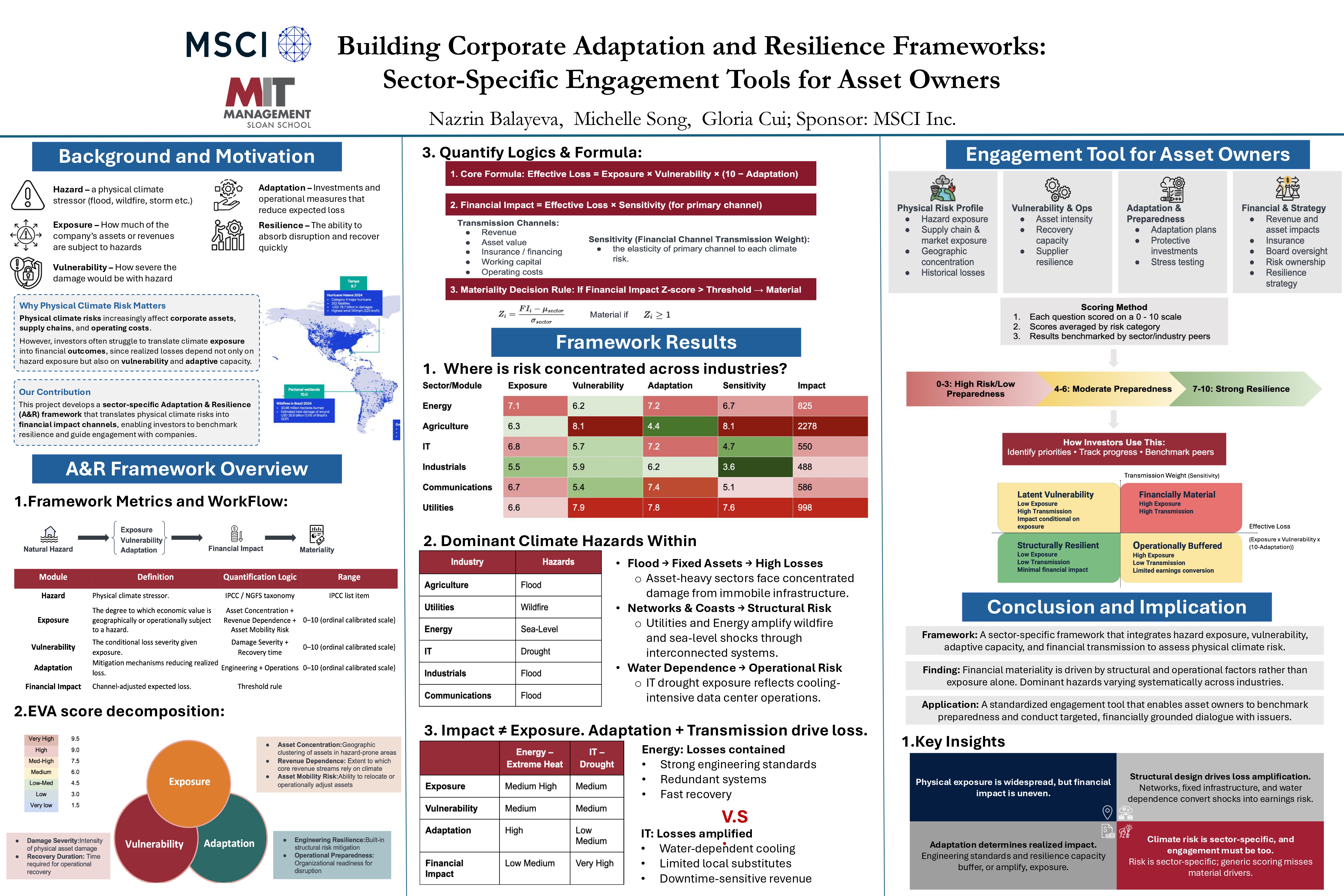
The financial relevance of extreme weather events and other physical impacts of a warming world is driven by structural and operational factors at individual companies rather than exposure to such risks alone.
That’s according Nazrin Balayeva, Michelle Song and Gloria Cui, members of the MIT Sloan School of Management’s Class of 2027, who find that how readily exposure to physical risk flows through to earnings matters just as much as the exposure itself.
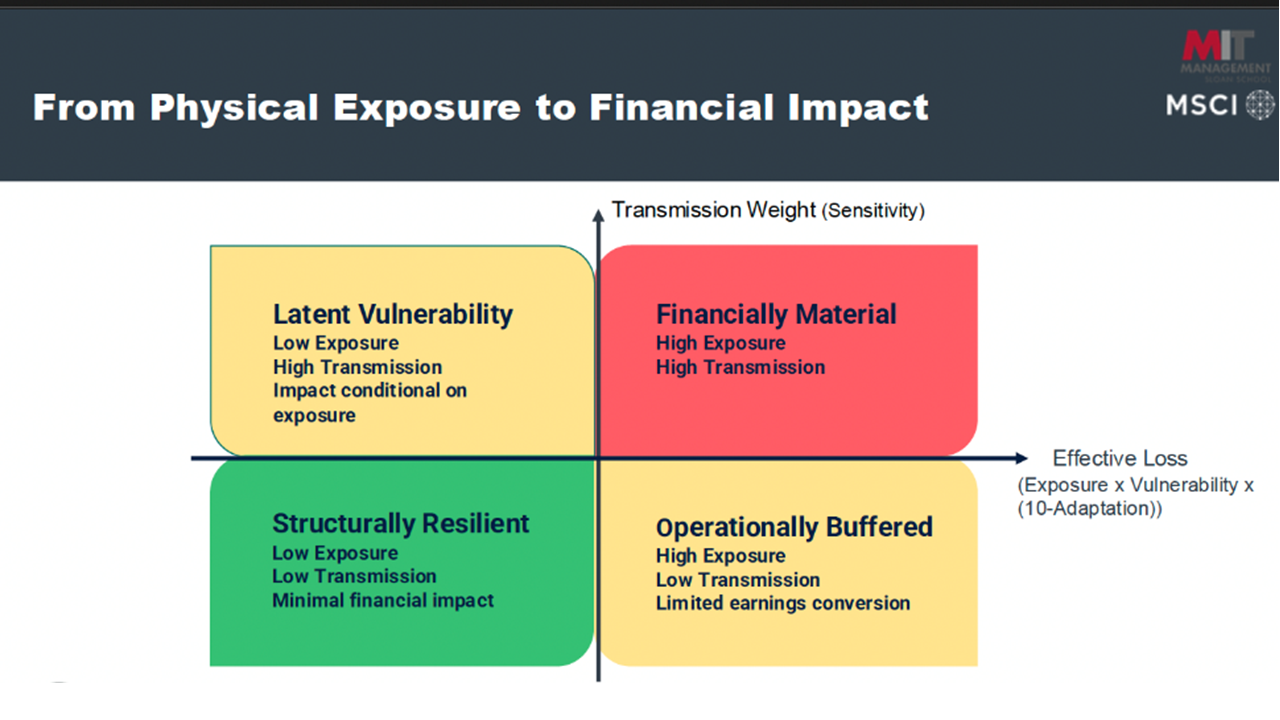
A company that’s highly exposed to physical risk but with strong buffers such as operational flexibility and diversified supply chains may be less financially vulnerable than a company that’s lightly exposed but with thin margins and concentrated operations, finds their analysis, which marks the latest a collaboration between the MIT Sloan Finance Lab (Fin-Lab) and MSCI now in its 12th year.
To inform investment decision-making, the student-researchers developed a framework and standardized engagement tool that enables investors to benchmark companies’ preparedness for extreme weather events and conduct targeted, financially grounded dialogue with portfolio companies.
The research arrives as the frequency of major natural disasters is rising sharply. The U.S. alone recorded 23 billion-dollar weather disasters last year, compared with a handful annually in the 1980s.
“Exposure to physical risk is widespread, but the financial impact is uneven,” noted Gloria Cui, on behalf of her colleagues, who presented their findings to MSCI analysts in February. “But even if the risk is very high, companies with good adaptation tools can still constrain their loss to a minimum.”
Lessons from the oil and gas industry
The researchers cite the oil and gas sector, which faces some of the highest physical exposure to hurricanes of any industry, with its infrastructure in capital-intensive, largely immovable and heavily concentrated along coastlines and offshore. When storms hit, they note, the financial damage tends to follow quickly and directly: Assets get written down, production shuts down and revenue drops.
Yet when you run the full calculation – factoring in the industry’s strong engineering standards and safety protocols – hurricane risk doesn’t clear the bar for financial relevance at the sector level, meaning it isn’t large enough, on average, to meaningfully move the needle for investors.
The pattern across sectors is consistent. What separates manageable risk from serious loss is how well a company has adapted, and how directly a given hazard hits its core operations.